A multi-page spread in Politico highlights the redevelopment challenges and successes of the Menomonee River Valley industrial site in Milwaukee. Writer Colin Woodard traces the transformation of the four-mile long, half-mile wide tract of land from its industrial beginnings in the mid-1880s to its recent industrial and commercial rebirth.
No Increase to VPLE Review Fee for FY17
The Remediation and Redevelopment Program has recalculated the hourly review fee rate for sites in the Voluntary Party Liability Exemption (VPLE) program. As required by law (Wis. Admin. § NR 750.07), the fee is calculated each year using the rates for current wages, fringe and indirect costs. The rate will not change for the upcoming year and will continue to be $105/hour for the state fiscal year 2017 which began July 1, 2016 and ends June 30, 2017. This rate has remained unchanged since July 2014.
The Wisconsin DNR’s VPLE program allows for anyone to conduct a complete investigation and remedial action of a piece of property and receive an exemption from future liability that is transferable to future property owners. Participants in the VPLE program pay this fee for DNR staff to provide technical oversight of the work conducted as part of the remediation process.
More information about the VPLE program is available on the RR Program website: http://dnr.wi.gov/topic/brownfields/vple.html.
RR Program RCL Calculator Updated
The Wisconsin DNR updated the numerical soil standards, or residual contaminant levels (RCLs), in the Remediation and Redevelopment program’s spreadsheet of RCLs to reflect the US EPA June 2016 update to its Regional Screening Level (RSL) website. The RR Program RCL Spreadsheet Update (RR-052d) provides a summary of the updates incorporated in the June 2016 spreadsheet.
For more information and to access the RCL calculator (macro and non-macro versions), visit the Resources for Environmental Professionals webpage and click on the “Soil RCLs” tab.
DNR Brownfields Program Releases New Video Highlighting Cleanup and Redevelopment Successes
The DNR brownfields program is pleased to present “Beans & Brew,” a seven-minute video highlighting the remediation and redevelopment efforts undertaken by Milwaukee’s Colectivo Coffee and the Potosi Brewery. These two stories highlight the impressive impact of collaboration between private industry, local public sector supporters and the DNR.
Over 20 years of experience has shown that cleanups are both possible and profitable. The environment and the economy can benefit together, as confirmed by a recent UW-Whitewater study.
Beans & Brew is the brownfields program’s most recent video to highlight a successful cleanup and redevelopment project in Wisconsin. Other videos can be seen on the agency’s YouTube channel. Write-ups on these and 101 additional successful redevelopment stories are available at http://dnr.wi.gov/topic/Brownfields/Success.html.
Brownfields Study Group Co-Chair Dave Misky Honored With Public Policy Award
Citing his creative solutions to solving complex redevelopment challenges, the Public Policy Forum has chosen David Misky, Assistant Executive Director-Secretary for the Redevelopment Authority of the City of Milwaukee (RACM) and the Co-Chair of the Wisconsin Brownfields Study Group, as the recipient of the 2016 Norman N. Gill Award for Individual Excellence. The award will be presented at the Forum’s “Salute to Local Government” event on June 21, 2016 in Milwaukee.
Misky joined RACM in 2003 and was appointed Assistant Executive Director-Secretary in 2008. He led the agency’s redevelopment efforts in the Menomonee Valley, the Villard Library project, the 440th Local Redevelopment Plan and on efforts at Century City and the Harbor District. Under his leadership, RACM has been a national leader in securing federal brownfield grants and Milwaukee has become an EPA “showcase community.” He also helped to organize a unique Brownfield Revolving Loan Fund and has played a leading role in the city’s efforts to aggressively address tax delinquent and blighted properties.
Established in 1913 as a good government watchdog, the Public Policy Forum is a private, non-profit, independent research organization dedicated to enhancing the quality of public policy decision-making in southeast Wisconsin.
As Co-Chair of the Brownfields Study Group, Misky helps lead a wide-ranging group of professionals evaluating the state’s current brownfields policies and, where necessary, recommending changes and proposing additional incentives for the cleanup and reuse of abandoned or underused properties with real or perceived contamination.
Brownfield Awards go to Three Communities in Wisconsin
Three Wisconsin Assessment Monies (WAM) Contractor Services Awards were awarded to assess contamination at two former wood-processing plants and a former creamery in Clark, Lincoln and Rusk counties.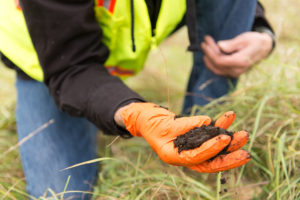
The projects are valued up to $18,000 each. The services will be used to determine soil and groundwater conditions at the former Owen Manufacturing wood-processing plant in Clark County; the former Hurd Manufacturing facility in Merrill/Lincoln counties; and at the former Sheldon Creamery in Rusk County.
See the full article for more information.
Leverage Resources for Brownfields Redevelopment
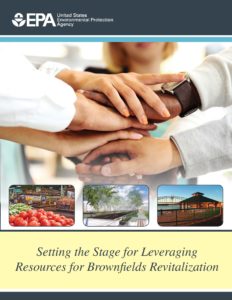 The US EPA’s new guide – Setting the Stage for Leveraging Resources for Brownfields Revitalization – assists communities in overcoming the challenges of making sound investment decisions to attract additional resources for brownfields revitalization projects. This guide is intended to help communities identify how best to invest limited local resources that could potentially open opportunities for additional public funds and attract the interest and support of outside investors for additional funding.
New RR Guidance Finalized – Post-Closure Modifications: Covers and Changes in Property Boundaries
RR-987 relating to post-closure modifications, the review process and applicable fees is now final and available for viewing. Contact Jane Lemcke with any questions about this document.
Wisconsin DNR Receives EPA Coalition Assessment Grant
The DNR’s RR Program will continue to help communities assess their brownfield sites with the addition of a $600,000 grant from the US EPA’s Assessment, Revolving Loan Fund and Cleanup (ARC) grant program. The DNR, in partnership with the Wisconsin Brownfields Coalition (WBC), is one of four Wisconsin entities to receive an FY16 ARC grant, allowing the agency to continue providing assistance to communities through the Wisconsin Assessment Monies (WAM) program. The WAM program provides no-cost environmental assessments at sites that are poised for cleanup and redevelopment. The WBC includes the DNR and all nine Wisconsin Regional Planning Commissions.
In the EPA press release, Administrator Gina McCarthy says, “These grants will empower communities to transform idle, languishing lands into vibrant hubs for business, jobs, and recreation. It’s all about empowering that initial funding, and sparking that first conversation to set stalled sites on a path to smart, safe redevelopment that directly benefits communities.”
UW-Whitewater Report Shows Positive Impacts on Distressed Areas and Small Towns
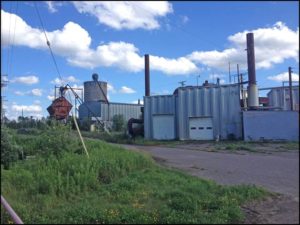 An article in Renewal and Redevelopment highlights some impressive numbers from the UW Whitewater report, “The Economic and Fiscal Impact of Wisconsin’s Brownfields Investments” particularly as it relates to small communities and distressed areas. The article points out that economically disadvantaged communities received more assistance than more prosperous areas in the state. More than half of assisted sites were in census tracts with a lower median household income than the state as a whole.
The investment of cleanup and redevelopment of brownfields has also had an impact on small Wisconsin communities. Small towns with fewer than 15,000 people can be greatly impacted by a blighted property. The redevelopment of an abandoned site can help bring a community back to life.
The UW-Whitewater study was prepared by the University’s Fiscal and Economic Research Center for the Brownfields Study Group and the Wisconsin Economic Development Institute.