US EPA

“All Aboard!” Spooner’s Historic Roundhouse Revival

Spooner Roundhouse

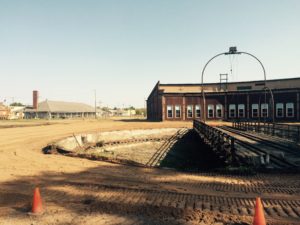
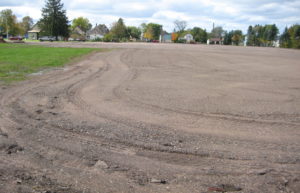
Contaminated soils from around the Roundhouse were excavated and hauled off site to the old Spooner Landfill. The Roundhouse area was then capped and seeded. This area will be used for a public space. Spooner will be renovating the Roundhouse as a public space.

The city of Spooner, located in northwestern Wisconsin, pop. 2,700, has a rich railroad heritage. The city’s origin and colorful history is rooted in the railroad expansion of the late 19th and early 20th centuries.

Spooner was an important railroad center of the Chicago and North Western Railway for many years. A historic railway roundhouse, a surviving turntable, and other aspects of the original rail yard still exist. The Spooner roundhouse is one of the few remaining structures of its kind.

Several local and state organizations have collaborated for years on efforts to clean up environmental contamination and preserve this unique and historic landmark property. The land is in the “Museum District” which also includes the Railroad Memories Museum and the Wisconsin Canoe Heritage Museum. The Roundhouse property includes one of the only working turntables in the state. The Wisconsin Great Northern Railroad operates active tracks on the site.
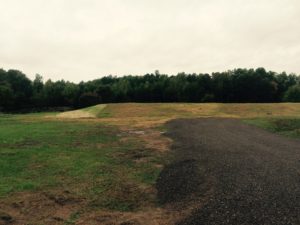
Remediated dirt

The regulatory issues involved in this project were handled through a collaboration of the Wisconsin DNR’s R&R and Waste and Materials Management programs. The excavated soils were placed at the old Spooner Landfill and used as part of a recapping project. The contaminated soils remaining at the site were capped and seeded.

Many years of railroad activities and subsequent manufacturing uses led to concerns about possible environmental contamination on the property. Section 128(a) funding from the EPA contributed to several successful Green Team project meetings with the Wisconsin DNR, the city of Spooner, and other stakeholders. Section 128(a) funds also supported the Wisconsin DNR’s efforts to counsel the city on managing environmental liability and other communications with the city. Spooner further received Phase I ESA contractor services through the Wisconsin DNR’s Wisconsin Assessments Money (WAM) program, funded by the EPA ARC Assessment grants, prior to its acquisition of the roundhouse property.

Contaminated soils from around the roundhouse were excavated and disposed of at the old city landfill, as part of a recapping project. The roundhouse property was then capped and seeded. The property will be open to the public, and the city of Spooner is also renovating the roundhouse as a public space.
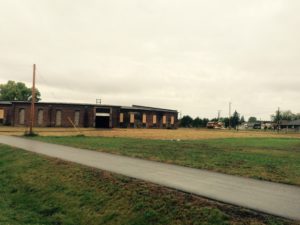
Roundhouse turntable

The Roundhouse property includes one of the only working turntables in the state.

The success of this northern Wisconsin cleanup site is highlighted in the recent year-end Report, a summary of the outcomes funded by a Section 128(a) grant from the US EPA made to the Wisconsin DNR’s Brownfields program. Previous 128(a) reports, including mid-year and year-end summaries going back to 2012, can be found on the DNR’s RR Program web page.
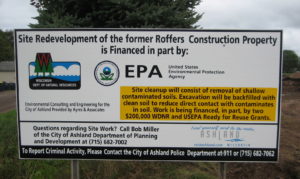
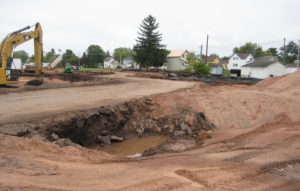
 

Annual Report Details Northern Wisconsin Cleanup

A vacant industrial lot in the heart of Ashland, just a few blocks from Lake Superior, is now poised for redevelopment with the help of two section 104(k) cleanup subgrants totaling $400,000 from Wisconsin’s revolving loan fund, known as Ready for Reuse.

The success of this northern Wisconsin cleanup site is highlighted in the recent year-end Report, a summary of the outcomes funded by a Section 128(a) Grant from the US EPA made to the Wisconsin DNR’s Brownfields program.

The former Roffers property was once the site of a railroad roundhouse in the late 1800s. At that time, the grounds were used for coal storage. Later, it became the site of the Ruth Manufacturing Company saw mill and lumber yard. In the 1950s, Roffers Construction operated on the site and did so until 2007. Additional buildings on the property also housed various businesses over the last century, including a flour mill, a grocery wholesaler warehouse, and the headquarters of a local general contractor.

These past uses brought widespread PAH contamination that was excavated and used to mitigate a subsidence issue at a closed city landfill through a cross-program effort at the Wisconsin DNR. This alternate disposal location gave the city an inexpensive option for bringing the landfill back into compliance while also providing a greener remedial alternative to the substantial transportation distance and cost of hauling the material to the nearest open landfill in this rural, remote area of the state.

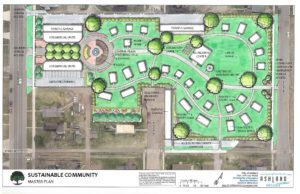
Currently, the city is working with a promising development proposal for a mixed use, walkable residential and commercial space with integrated park and greenspace. By proposing a mix of single and multi-family dwellings with small footprints and affordable pricing adjacent to commercial incubator space, the development aims to appeal to new graduates of the local college.

Previous 128(a) reports, including mid-year and year-end summaries going back to 2012, can be found on the DNR’s RR Program web page.


EPA Grant Available for Environmental Workforce Development, Job Training; Webinar-based Application Assistance Available

The U.S. Environmental Protection Agency (EPA) is now accepting Request for Proposals (RFPs) for FY18 grants related to environmental workforce development and job training. These grants are provided to eligible entities, including nonprofit organizations, to develop environmental programs that recruit, train and place unemployed and under-employed residents of communities affected by brownfields and other environmental contamination with the skills needed to secure full-time, sustainable employment in the environmental field and in assessment and cleanup work taking place in their communities.

The grants, called Environmental Workforce Development and Job Training (EWDJT) grants, may be funded up to $200,000 over a three-year period.

To assist applicants with their proposals, EPA will hold an informational webinar for prospective grant applicants. The webinar will be held on November 7, 2017 at 1:30 p.m. EST. It will be recorded and posted to EPA’s brownfields website.

The deadline to submit an RFP is December 15, 2017. All proposals must be submitted through the grants.gov website.

DNR Brownfields Report of Annual Accomplishments Now Available

The Remediation and Redevelopment Program’s annual report to the US EPA of brownfields accomplishments, which details a year-long effort of outputs and outcomes funded by a federal grant, is now available online. The Section 128(a) Grant Final Accomplishments Report, for the reporting period of September 1, 2016 to August 31, 2017, highlights work completed in the previous funding year.

The “128(a) Final Report” includes a summary of the various metrics tracked during the year (Green Team meetings, outreach activities, etc.), highlights a number of successful cleanups and redevelopments from across the state, and features a number of important program improvements undertaken during the year.

Previous 128(a) reports can be found on the Brownfields Program web page.


Requests for DNR “Acknowledgment Letter” Due November 2

If you plan to submit an application for an FY2018 EPA brownfield grant, you only have a couple weeks left to request your letter of acknowledgment from the Remediation and Redevelopment Program for your federal grant application.

The EPA requires grant applicants other than tribal environmental authorities to obtain a letter from the DNR acknowledging that the state is aware the applicant is applying for a federal grant to conduct brownfield assessment, revolving loan fund or cleanup activities.

While the federal deadline to submit an application for Brownfields Assessment, Revolving Loan Fund, or Cleanup grants isn’t until November 16, 2017, the DNR requests at least two weeks’ notice – November 2 – to develop and deliver your letter in a timely manner. These federal grants are available for the assessment and cleanup of brownfield properties.

You can request your state letter of acknowledgment from the DNR by contacting Elisabeth Kuisis (608-267-0543).

To find out how to get a DNR letter of acknowledgment and other useful information, visit the DNR Federal brownfield grants web page. For more information about the federal grants, see the September 20 article in the RR Report.

FY 2018 EPA Brownfields Grant Application Guidelines Released

The FY 2018 application guidelines for EPA’s Brownfields Assessment, Revolving Loan Fund and Cleanup grants have been released by the Office of Land and Emergency Management. Proposals are due to EPA by November 16, 2017 at 11:59 p.m. Eastern time.

These federal grants are available for the assessment and cleanup of brownfield properties.

For assistance with applying for a FY 2018 Brownfields Grant, contact your regional EPA representative or the Region 5 Technical Assistance to Brownfield (TAB) provider, KSU. TAB can provide free review of your draft EPA Assessment and Cleanup proposals. Please give TAB a one-week heads-up that you will be sending a draft to review. It generally takes TAB a few days to get the proposals back to you. Please contact Blase Leven (785-532-0780) to reserve your spot.

To find out how to get a DNR letter of support and other useful information, visit the DNR Federal brownfield grants web page.

Innovative Brownfield Redevelopments Sought for Phoenix Award at National Brownfields Conference

The application process for the Phoenix Awards during the 2017 National Brownfields Conference is now open. The award highlights outstanding brownfield redevelopment and revitalization, with top projects offering a fresh take on cleanups, innovation, and community impact.

The deadline to submit an application for this year’s Phoenix Awards is October 4, 2017. Awards will be presented during this year’s National Brownfields Conference, held Dec. 5-7 in Pittsburgh, PA.

2017 National Brownfields Training Conference – Registration Open

Registration is open for the 2017 National Brownfields Training Conference. This year’s event is being held in Pittsburgh, PA and will run from Dec. 5-7, 2017.

This is the premier brownfields and land revitalization event of the year; attendees will enjoy opportunities to participate in training events, observe success stories first hand during mobile workshops, listen to experts regarding best practices for meeting brownfields challenges, and network with thousands of other stakeholders.

Registration and accommodations are now open for the event.

Visit the official Brownfields Conference Website for additional information at www.brownfields2017.org.

Redevelopment Successes Detailed in Reports

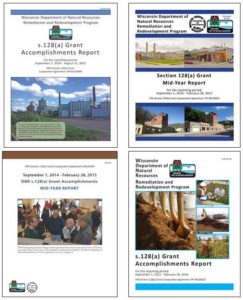
Report Covers

The RR Program details the various activities undertaken and achieved throughout the year through the biannual Section 128(a) Report.

For nearly 15 years, the Remediation and Redevelopment Program has worked under a cooperative agreement with the U.S. Environmental Protection Agency to enhance state efforts with the cleanup and redevelopment of brownfields. As part of the agreement, the RR Program details the various activities undertaken and achieved throughout the year and makes those efforts available to the public through the biannual Section 128(a) Report. These reports can be found on the Brownfields Program webpage and we invite you to have a look. Recent reports detail redevelopment sites in Manitowoc and Madison, highlight video projects, recognize staff efforts, and recognize our external partners for helping guide program efforts.  


Wisconsin Communities Receive $1.8M in EPA Brownfields Awards for FY17

Money stack clip artA handful of Wisconsin communities, counties and entities will put to use recent brownfields awards from the US EPA. The awards are for assessment or cleanup activities and are part of the 279 awards given to communities across the nation, totaling $56.8 million.

These Assessment and Cleanup Grants, in Wisconsin and elsewhere, will aid under-served communities through the assessment and cleanup of abandoned industrial and commercial properties and expand the ability of communities to recycle vacant and abandoned properties for new, productive reuses.

Recipient Assessment / Cleanup Award Amount
Blugold Real Estate Foundation, Inc. (Eau Claire) Cleanup $200,000
Green Bay Assessment $300,000
Sheboygan County Assessment $300,000
Washington County Assessment $600,000
Wauwatosa Assessment $200,000

The US EPA has a list of all FY17 grants selected for funding, as well as a searchable database and fact sheets of all selected applicants.