Cleanup Tools

US EPA Releases Online Mapping Tool to Help Protect Drinking Water Sources

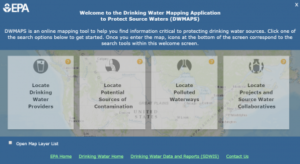
Welcome page of DWMAPS displays search tools for users to find information about drinking water sources.

This robust, online mapping tool provides the public, water system operators, state programs, and federal agencies with critical information to help them safeguard the sources of America’s drinking water.

The DWMAPS – the Drinking Water Mapping Application to Protect Source Waters – allows users to learn about their watershed and understand more about their water supplier. The DWMAPS also allows users to see if sources of their drinking water are polluted and if there are possible sources of pollution that could affect their community’s water supply. The tool can even guide users to ways they can get involved in protecting drinking water sources in their community.

 For more information and to access the map visit http://www.epa.gov/sourcewaterprotection/dwmaps.

 

UW-Whitewater Report Identifies Big Benefits from Brownfield Reclamation

Since 1998, Wisconsin has invested $121.4 million in the remediation of 703 contaminated properties, according to a recent UW-Whitewater study. The study says this investment leveraged tens of millions of dollars in local and federal incentives, and recouped nearly $1.8 billion from enhanced economic activity. This is a 14-fold return on investment, on top of the public health and environmental benefits generated by these cleanup projects.

The 703 projects that received state assistance are a small, but important, portion of the 15,000-plus state properties that have been cleaned up and put back into productive use over the past 20 years. These brownfield properties were once some of the toughest projects to tackle. They were dilapidated, destitute and, often, significantly contaminated. These properties needed a public push to get going.

The UW-Whitewater study, prepared by the University’s Fiscal and Economic Research Center for the Brownfields Study Group and the Wisconsin Economic Development Institute, calculates that local governments in Wisconsin gain $88.5 million annually from redeveloped brownfields.

The report shows that $1.00 of state funding for brownfields projects leverages $27.25 in total economic growth funding. In other words, $121.4 million from the state has generated $3.3 billion in direct total investment. The report also identified 29,883 direct new and retained permanent jobs related to completed projects in the 703 studied, and says another 9,107 jobs are planned at projects still underway.